.
Estancia San Luis, Torres del Paine
In the far south of Chile, just a few kilometers from the Argentine border, there is a place where fly fishing unfolds under the constant presence of the Torres del Paine. San Luis is a remote, wild, and deeply Patagonian estancia, where nature dominates the landscape and every day on the water becomes an unforgettable experience.
IIn 2024, I was contacted by Claudio Joost, owner of the fishing operation Grey Fox Outdoor, whom I already knew through the fly fishing world and mutual friends. His idea was to invite me to Estancia San Luis, near Puerto Natales, to update the destination’s audiovisual content and explore the possibility of working together on photography and video.
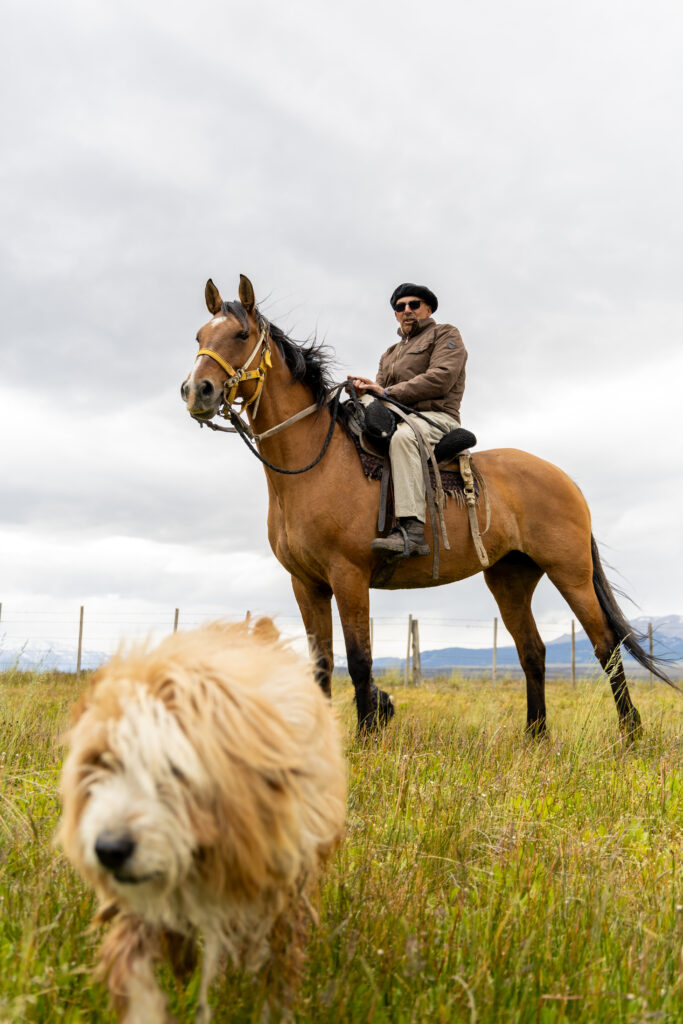
San Luis is an estancia located north of Puerto Natales, about 90 kilometers away, very close to the Argentine border. It is an incredibly remote place—literally at the end of the world. Perhaps for that reason, Claudio chose to call this destination el ultimo puesto “The Last Outpost,” also known as No Man’s Land; The word Puesto, for the Estancia administration is a gaucho house (a Surveillance post), where used to be a worker that takes care of a section of the Estancia»
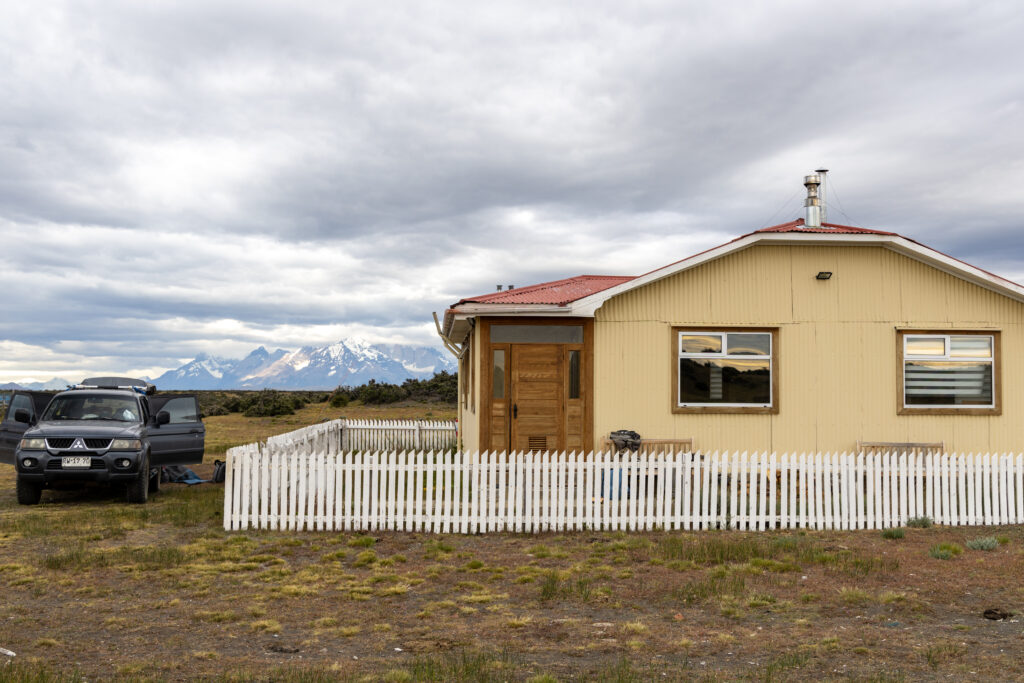
Within the more than fifteen thousand hectares that make up the estancia, there is an old sheep herder’s shelter that has been renovated to host visiting guests. It is a simple refuge, yet perfectly integrated into the surrounding Patagonian landscape.
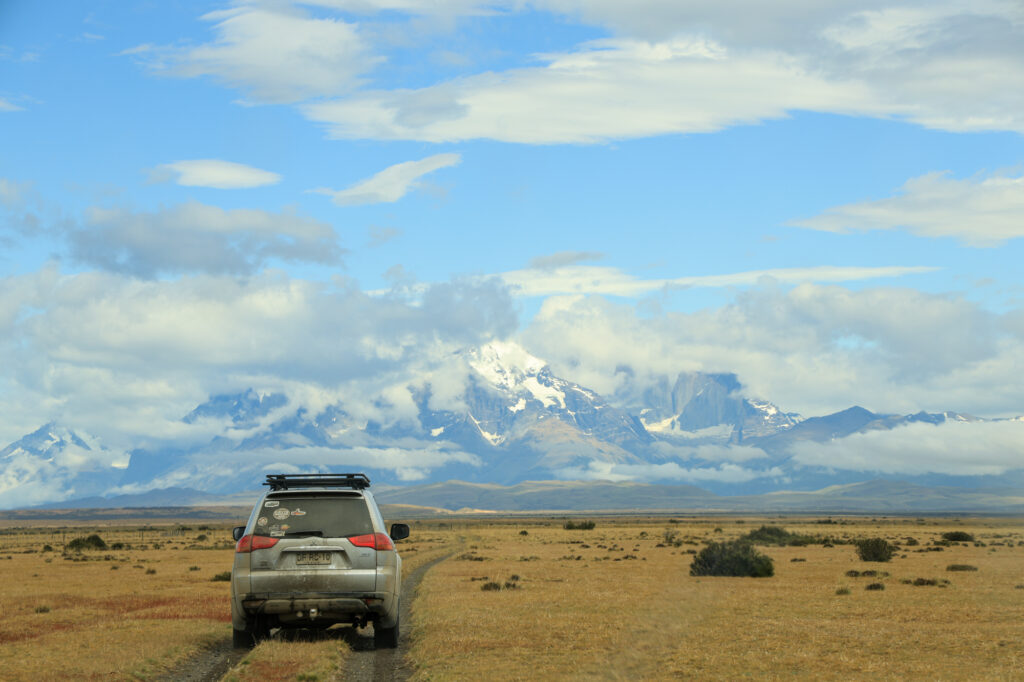
From the airport to San Luis, the journey already begins to reveal what lies ahead. The landscape is overwhelmingly vast: endless plains, constant wind, and a persistent sense of being far removed from everything. And as if that weren’t enough, the horizon is dominated by one of the most breathtaking sights in Chile: the Torres del Paine. The towers rise in the distance and remain present throughout the entire fishing experience.
The estancia is also home to an impressive abundance of wildlife. Horses, guanacos, rheas, birds of all kinds, condors, foxes, and, of course, pumas inhabit these lands.
As we were settling into the lodge, Claudio—mate in hand—said casually:
“Well… there’s the river.”
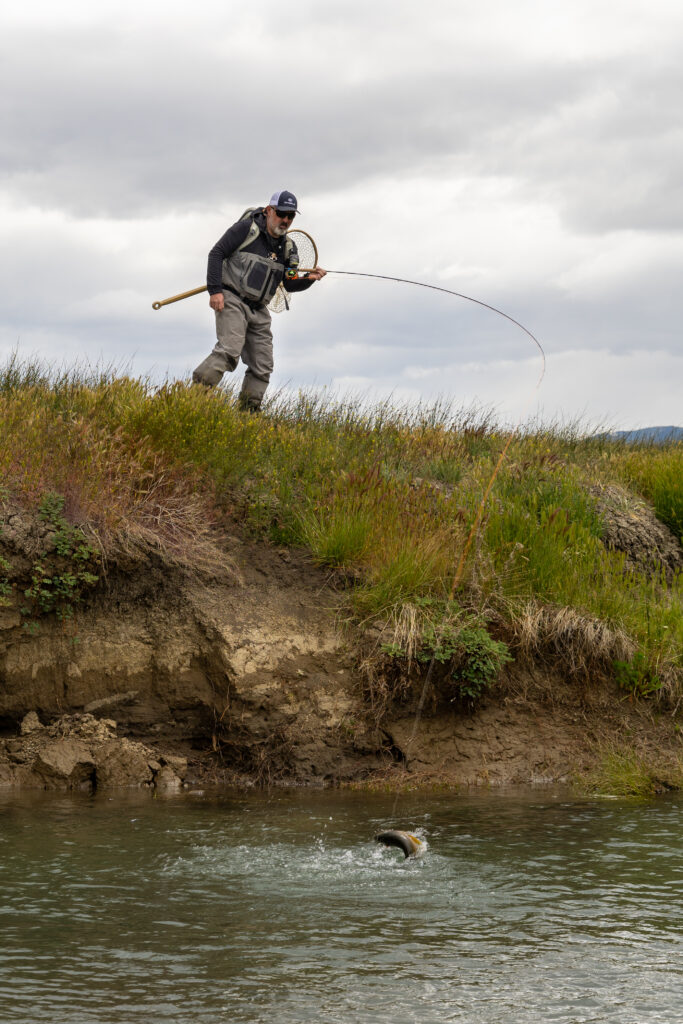
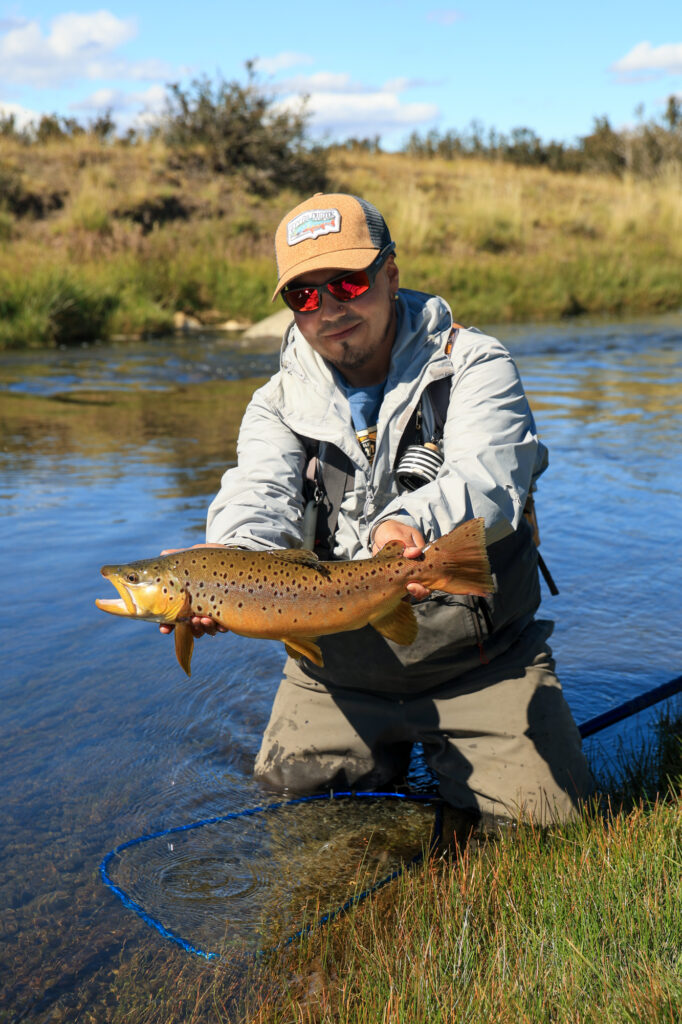
Sitting just outside the cabin, he pointed out that less than a hundred meters away lay the estancia’s main spring creek. A river that can be easily waded, with virtually no obstacles, and that holds wild brown trout averaging around one kilogram in weight.
Fishing here is primarily done with dry flies and floating lines, using, depending on the season, patterns that imitate grasshoppers, beetles, and small terrestrial insects.
I’ve had the opportunity to fish throughout much of Chile, but this place left a profound impact on both my soul and my identity as an angler. As the days went by—filming and photographing—I couldn’t stop being amazed by its beauty. More than once, I found myself thinking: I wish every one of my fishing friends could experience a place like this at least once in their lives.
This is a place where you can sit in the middle of the Patagonian steppe and simply take in everything around you, always under the imposing presence of the Torres del Paine.
And I haven’t even talked about the most important part yet: the fishing.
Fishing in San Luis is difficult to describe without sounding exaggerated. I had never been in a place before where there were so many real opportunities to catch a trophy trout on a dry fly.
The river, tea-colored yet remarkably clear throughout much of the season, allows you to walk along it while spotting fish. You see the trout, prepare your cast, and wait for the precise moment your fly drifts into its feeding lane. That moment when the trout rises to the surface is something every angler knows well.
This river holds exclusively brown trout—strong, healthy fish with deep golden tones. Here, even a 4X leader can be broken without much effort. But the experience goes far beyond fishing. The entire place has a way of captivating you with everything happening around you. As you walk, you come across animal remains—some old, some recent—left behind by the pumas that roam the estancia. In the distance, you can hear the calls of guanacos; the sudden flight of a cauquén might startle you, or the fast run of a rhea crossing the plains. This is, quite literally, a wild place.
And of course, there are also the sheep of the estancia, scattered throughout the landscape.
Perhaps what captivated me the most was the setting in which the fishing takes place. Everything feels naturally arranged, with very little human intervention. Beyond a few fences and the main buildings, the landscape becomes increasingly untouched the deeper you go into the estancia.
There is one element that defines this destination—and much of the Magallanes region: the wind. For anglers, it can be a major challenge. In San Luis, the wind is constant, often strong, but it can also become your greatest ally.
Perhaps what captivated me the most was the setting in which the fishing takes place. Everything feels naturally arranged, with very little human intervention. Beyond a few fences and the main buildings, the landscape becomes increasingly untouched the deeper you go into the estancia.
There is one element that defines this destination—and much of the Magallanes region: the wind. For anglers, it can be a major challenge. In San Luis, the wind is constant, often strong, but it can also become your greatest ally.
On the rare moments when the wind dropped, the fishing became immediately more technical. The fish could spot you from a distance, as the river offers very little cover. Everything becomes more tactical, more precise—a challenge that, rather than being a drawback, is part of the essence of Chilean Patagonia.
Evenings always ended the same way: coffee or mate at the cabin, watching the light fade over the steppe.
Patagonia has something special—something difficult to explain. It carries a deep sense of home, even for those who are just passing through.
San Luis is one of those places you simply never forget. A place I will undoubtedly return to.
There, you will be welcomed by Claudio Joost, a guide and outfitter with extensive experience in the fishing world. His charisma and hospitality are a fundamental part of the destination. Claudio welcomes you as a friend.
A friend arriving at the end of the world, in no man’s land.